
Spring Yard Cleanup Checklist for Peoria, IL (March to April)
The first warm Saturday in March pulls everyone outside. A homeowner near Bradley University raked his whole lawn that day, soaked and soft. By April the raked areas were thin and the footprints were still there. His neighbor waited two weeks for the ground to dry and had a better lawn by May.
Spring yard cleanup in Peoria is about order and timing more than effort. This checklist covers what to do first and what waits for dry soil. It also lists what to leave until the lawn is growing.
What this guide covers
- When spring cleanup should start in Peoria
- The first dry day jobs
- Bed, perennial and shrub work in March
- Lawn work that waits for April
- Mulch, edging and the first mow
- Jobs to skip or delay
- What a cleanup costs when a crew does it
When should you start spring yard cleanup in Peoria?
Start when the snow is gone and the ground is firm enough to walk on without leaving footprints. In Peoria that is usually mid to late March, but it can slide into early April after a wet winter. The test is simple. Step on the lawn. If water squeezes up or the print stays, wait a few more days. Soil that is worked wet gets compacted for the whole season.
The Illinois Extension puts it plainly. Begin on a dry day once you can walk the yard without damaging wet ground. Peoria’s clay soils hold water longer than sandy ground, so patience pays off here more than in many places.
What should you do on the first dry day?
Pick up what winter left behind. Walk the yard and collect branches, trash, plastic and anything the wind brought in. Check fences, gates and downspouts. Look at the lawn edges along the driveway and sidewalk for salt and plow damage. Note any low spots that are still holding water. This first pass takes an hour and tells you what the rest of spring needs.
- Collect fallen branches and twigs from the lawn and beds.
- Pick up litter, plastic and leaf bags that blew in.
- Check downspout extensions and clear the splash zones.
- Walk the driveway and sidewalk edges for plow and salt damage.
- Mark spots where water is still standing.
- Look at shrubs for broken or bent branches.
- Make a short list of what needs a crew and what you can do.
Standing water that lasts more than a day after the thaw is worth noting. Our guide on fixing yard drainage in clay soil explains the common causes in Peoria yards.
What bed work can you do in March?
Beds are safe to work before the lawn is. Cut back last year’s perennials and ornamental grasses to a few inches. Pull the old leaf cover off beds once hard freezes are mostly done, usually late March. Prune winter damage from shrubs, but leave spring bloomers like lilac and forsythia until after they flower. Rake old mulch flat and check its depth before adding more.
Cut back perennials and grasses
Anything that was left standing for winter interest comes down now. Cut ornamental grasses to four to six inches before new shoots appear. Cut perennials to the crown. Leave anything still green at the base. Bag or compost the cuttings.
Prune the right shrubs
Late winter is the time to prune summer blooming shrubs and remove dead or broken wood on anything. Wait on lilac, forsythia, viburnum and other spring bloomers, or you cut off this year’s flowers. Evergreens with brown tips from winter should wait until late May. Our post on winter burn on evergreens explains why.
Pull back winter leaf cover
If you left leaves on beds for insulation, start pulling them off in late March. Do it over a week or two rather than all at once. Early shoots are tender and a hard freeze is still possible in Peoria through mid-April. Compost the leaves or use them as a base under new mulch.
What lawn work should wait for April?
Raking, dethatching and the first mow all wait for growth to start. Do not rake dead grass in March. The crowns need to send out new roots first. Snow mold patches can be fluffed gently with a leaf rake once the lawn is dry, but that is all. Once the lawn has been mowed once or twice, usually mid-April, it is ready for harder raking and overseeding.
The lawn greens up over a few weeks once growth starts. Winter damaged blades drop off on their own. Raking hard in March pulls out crowns that would have recovered. If you see matted gray circles, read our guide to snow mold on Peoria lawns before you touch them.
The first mow
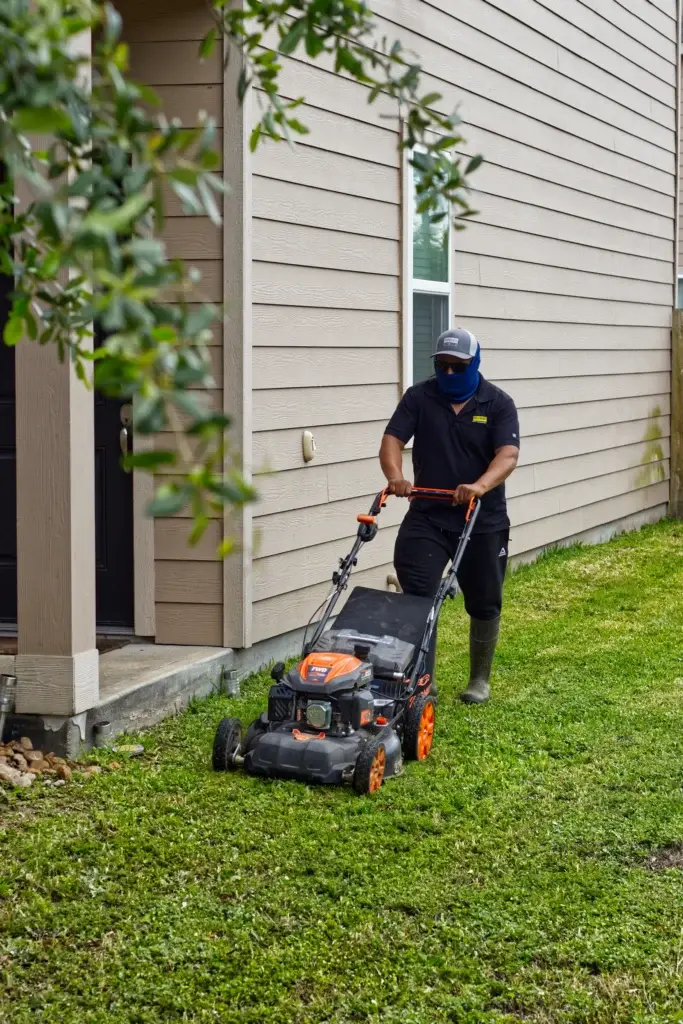
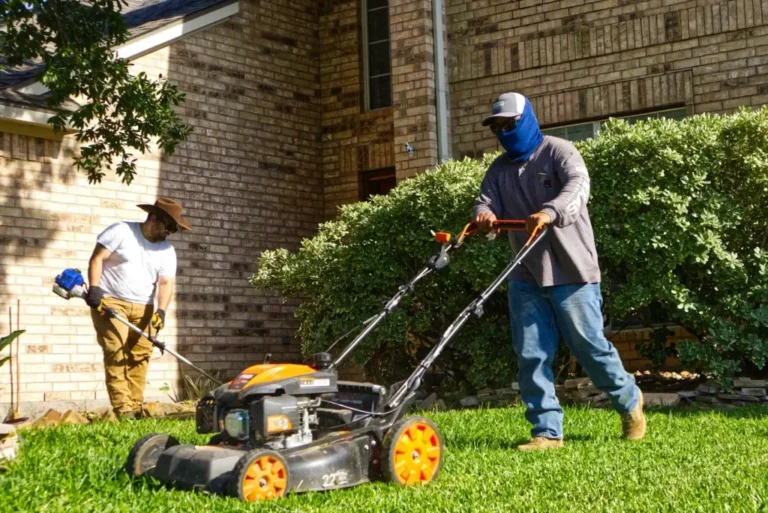
Mow as soon as the grass is tall enough, usually the second or third week of April in Peoria. Set the deck to 2.5 to 3 inches for bluegrass and ryegrass. Tall fescue can go to 3 to 4 inches. Sharpen the blade first. A dull blade shreds the leaf tips and the lawn looks gray for a week. Our mowing service starts the week the grass starts.
Fertilizer and crabgrass preventer
Skip early spring fertilizer. It pushes leaf growth before the roots are ready. The Extension suggests waiting until mid-May for the first feed. Crabgrass preventer is a different job and has its own timing. Our post on crabgrass preventer timing in Peoria covers the dates.
When should you mulch and edge?
Mulch and edge after the beds are cut back and before perennials get tall, usually mid to late April. Check the old mulch depth first. If two inches or more remain, rake it to break up the crust and skip the new layer. Add only enough to reach two to three inches total. Edge the bed line with a spade or edger before the mulch goes down so the edge stays clean.
Mulching too early traps cold in the soil and slows growth. Mulching too late means working around plants that are already up. For most Peoria yards the last two weeks of April hit the window. See our mulching and edging page for how we handle it. Our post on when to mulch in spring has the full timing.
Which spring jobs should you skip or delay?
Do not till wet soil, rake a soggy lawn, fertilize in March or prune spring flowering shrubs. Do not reseed bare spots and then apply crabgrass preventer over them, because most preventers stop grass seed too. Do not pile mulch against tree trunks. And do not plant tender annuals before the average last frost. In Peoria that falls around late April to early May.
For planting dates, our post on Peoria frost dates and the planting calendar has the full schedule. Hold the flats of annuals until the soil is warm and the frost risk has passed.
Spring cleanup checklist by week
| Timing | Do this | Hold off on |
|---|---|---|
| First dry day, mid to late March | Pick up debris, check drainage, note damage | Raking the lawn |
| Late March | Cut back perennials and grasses, prune summer bloomers, pull leaf cover | Fertilizer |
| Early April | Fluff snow mold patches, edge beds, repair plow damage | Dethatching |
| Mid-April | First mow, light raking, overseed thin spots | Crabgrass preventer over new seed |
| Late April | Mulch beds, crabgrass preventer on unseeded areas | Planting annuals |
| Mid-May | First fertilizer, plant annuals | Nothing, the season is on |
What does a spring cleanup cost in Peoria?
A spring cleanup is priced by the size of the yard and the amount of debris. A typical city lot with a few beds takes a crew half a day. Large lots in Dunlap or Germantown Hills with wooded edges take longer. Mulch adds material cost per cubic yard plus labor. Ask for a written quote that lists what is included. That keeps cleanup, mulch and the first mow from getting mixed up.
Our yard cleanup page lists what a standard visit covers. If you want it bundled with mowing for the season, our landscape maintenance plans start in April.
Spring cleanup mistakes we see most in Peoria
- Raking the lawn hard in March while it is still soft
- Walking and working on wet clay soil
- Cutting back lilac and forsythia before they bloom
- Adding three inches of new mulch on top of three inches of old
- Fertilizing in March instead of May
- Planting annuals the first warm week of April
- Piling spring mulch against tree trunks
Your next step
Back to those two lawns near Bradley. The one that waited for a dry week came out thicker, and the owner spent less time on it. Spring yard cleanup in Peoria rewards patience in March and effort in April. Follow the order above and the yard sets itself up for the whole season.
Want a crew to handle it? We run spring cleanups across Peoria, East Peoria, Peoria Heights, Dunlap, Morton and nearby towns. Call (309) 324-8084 or request a free written estimate. For the rest of the year, see the Peoria lawn care calendar or the Peoria landscaping FAQ. What is the first thing you notice in your yard when the snow goes?
Spring cleanup questions from Peoria homeowners
When should I start spring cleanup in Illinois?
Start when the snow is gone and the ground is firm enough to walk on without leaving prints. In central Illinois that is usually mid to late March.
Should I rake my lawn in early spring?
Not hard, and not while it is wet. Let the lawn green up and get mowed once or twice first. Gently fluff snow mold patches only after the lawn dries.
When should I cut back ornamental grasses?
Late winter or early spring before new growth starts. Cut them to four to six inches and compost the stalks.
Can I prune shrubs during spring cleanup?
Prune dead or broken wood on anything. Prune summer bloomers now. Wait on lilac, forsythia and other spring bloomers until after they flower.
When is the first mow in Peoria?
Usually the second or third week of April, once the grass is tall enough to cut. Set the mower to 2.5 to 3 inches for most lawns.
Should I fertilize my lawn in March?
No. Early fertilizer pushes leaf growth before roots are ready. Wait until mid-May for the first feed.
When should I mulch my beds in spring?
Mid to late April in Peoria, after perennials are cut back and before they get tall. Check old mulch depth first and add only what is needed.
When can I plant annuals in Peoria?
After the average last frost, which falls around late April to early May. Many gardeners wait until Mother’s Day to be safe.
Is it bad to walk on a wet lawn in spring?
Yes. Wet clay soil compacts easily and the damage lasts all season. Stay off until footprints no longer show.
What does a spring cleanup include?
Debris pickup, perennial and grass cutback, bed edging, light raking and often mulch. Ask for the list in writing so you know what is covered.