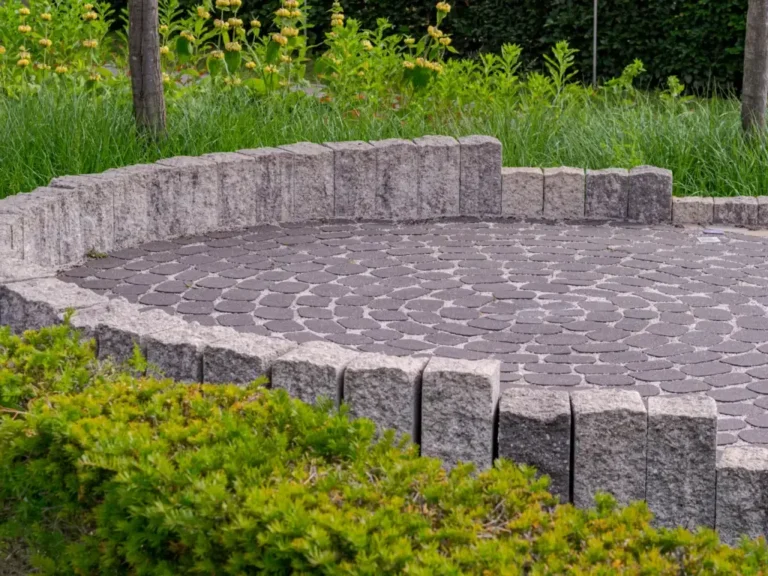
Retaining Wall Cost Peoria IL: Block, Stone and Timber Prices for Bluff and Clay Yards
It rains hard for two days and a stripe of mud shows up at the bottom of your slope. The lawn above the driveway has slumped a few inches. The soil is clay, and it is moving. That is when most Peoria homeowners start asking what a wall costs. The retaining wall cost Peoria IL contractors quote can differ a lot from bid to bid.
Retaining walls in the Peoria area typically run about $18 to $55 per square foot of wall face. That comes from published local ranges. Another 2026 source puts walls at $29 to $86 per linear foot. A short block wall is the low end. Tall walls, boulders, poured concrete, and walls on bluffs cost much more.
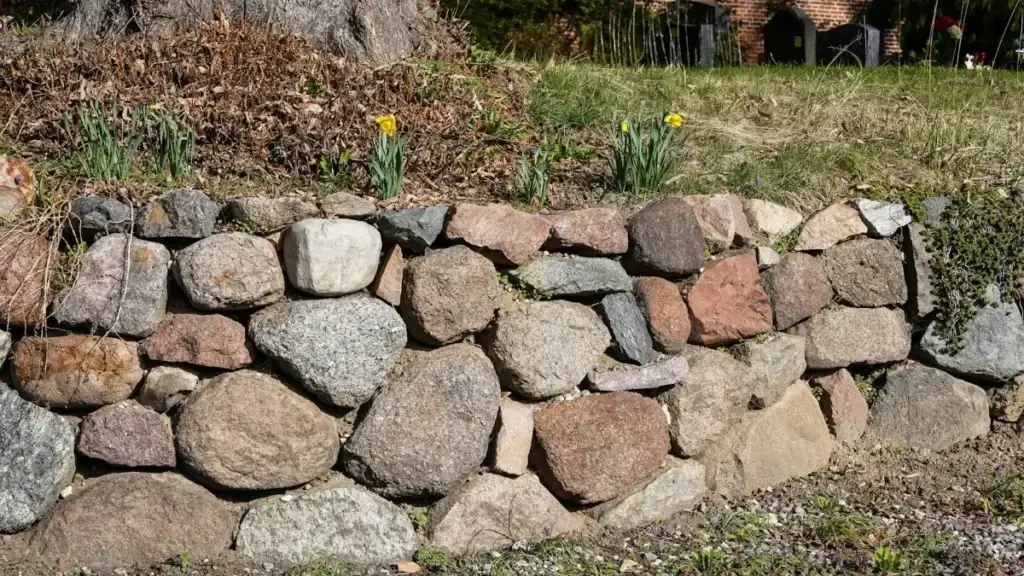
This guide explains what drives the price. It also covers how soil and slope change the job, and what to ask before you sign. For the wider picture, see our Peoria landscaping cost guide.
How much does a retaining wall cost in Peoria by material?
Material sets the baseline. The figures below are HomeBlue’s published Peoria ranges per square foot of wall face. The page is dated December 2022, so costs today may run higher. Use them to compare materials, not as quotes.
| Wall material | Per sq ft of wall face | Typical notes |
|---|---|---|
| Railroad tie or timber | $19 to $31 | Lowest cost, shorter life in wet clay |
| Cinder block | $20 to $33 | Plain look, often faced or capped |
| Interlocking block | $23 to $44 | Popular, drains well, many styles |
| Poured concrete | $33 to $49 | Very strong, needs forms and rebar |
| Natural boulder | $33 to $55 | Heavy, needs equipment, premium look |
Our 2026 cost guide uses a different measure. It lists $29 to $86 per linear foot for typical residential walls. Both are fair planning numbers. They differ because wall height, material and access differ.
What is the retaining wall cost per square foot for a typical yard?
Multiply the length by the height to get the wall face area, then apply the material range. A wall 30 feet long and 3 feet tall has 90 square feet of face. At $23 to $44, interlocking block comes to roughly $2,070 to $3,960. Boulder at $33 to $55 comes to about $2,970 to $4,950.
Here is that same 90 square foot wall across the other materials.
- Railroad tie: about $1,710 to $2,790.
- Cinder block: about $1,800 to $2,970.
- Poured concrete: about $2,970 to $4,410.
Add a cap stone, steps, lighting or a stair cut and the total rises. Our page on retaining walls shows the styles we install and what fits each yard.
Why do bluffs and wet clay raise the price?
Peoria sits on hills above the Illinois River. Peoria Heights is built on floodplain, bluff and plateau terrain, with Grand View Drive following the ridge. Slopes like that push harder on a wall than a flat yard does. The footing and drainage have to be right.
East Peoria sits on swampy floodplain with heavy clay. The 1927 Farm Creek flood dropped more than 5 inches of rain in about 6 hours. The city later built dry reservoirs in 1949 to 1951. In April 2013, saturated soil slid in several East Peoria hillsides. Saturated clay is the main reason walls fail.
Drainage behind a retaining wall
Water is what pushes a wall over. A proper wall has crushed stone behind it and a perforated pipe at the base. That pipe needs a place to drain. That drainage package adds cost. It also separates a wall that lasts from one that leans in three years. Related reading: how to fix yard drainage on clay soil.
What else changes a retaining wall quote?
- Wall height. Walls taller than about 4 feet often need an engineered design and sometimes a permit.
- Access. A tight side yard means hand carrying block and soil.
- Footing depth and base stone, which should reach below the frost line.
- Soil removal or import, and how the old soil is hauled off.
- Geogrid reinforcement on taller block walls.
- Utility locating before digging. Illinois law requires a call to 811.
Ask each bidder about height limits, drainage and warranty in writing. A low price that skips the drainage is not a bargain.
How do you compare retaining wall bids?
- Measure the wall length and the tallest height before you call.
- Ask each contractor to price the same material and height.
- Compare the footing, base stone, drain pipe and backfill, not only the total.
- Check whether the price includes soil hauling, caps, and cleanup.
- Ask whether they handle permits and 811 locates.
- Ask for a written warranty and what it covers.
If the slope is steep or the wall is above 4 feet, ask about an engineer. It is a small cost next to a wall that fails. Small walls pair well with the patio and walkway work that often goes with them.
The ranges in this guide are published figures and are not quotes. The HomeBlue figures are from December 2022 and the linear foot range is from 2026.
Retaining wall questions from Peoria homeowners
How much does a retaining wall cost in Peoria, IL?
Published Peoria ranges run about $18 to $55 per square foot of wall face. A 2026 source lists $29 to $86 per linear foot. A 90 square foot block wall often lands near $2,000 to $4,000.
What is the cheapest type of retaining wall?
Railroad tie or timber walls usually cost least up front. They also tend to rot sooner in wet clay. Interlocking block costs more but lasts longer and drains well.
Do I need a permit for a retaining wall in Peoria?
Many short garden walls do not, but walls above about 4 feet often do and may need an engineer. Rules differ by city and village. Call your local building office before you start.
How tall can a retaining wall be without an engineer?
A common rule is around 4 feet measured from the bottom of the footing, but local codes vary. Taller walls, or walls holding a driveway or building, should be engineered.
How long does a retaining wall last?
A well-built block or concrete wall can last decades. Timber walls often last 10 to 20 years in wet soil. Drainage and footing quality matter more than the material.
Why do retaining walls fail?
Most failures come from trapped water and poor base work. Without drainage behind the wall, clay becomes heavy and pushes outward. Thin footings and missing geogrid make it worse.
Do retaining walls need drainage behind them?
Yes. Crushed stone and a perforated pipe behind the wall let water escape instead of building pressure. It is one of the most important parts of the job.
Can I build a small retaining wall myself?
Low block walls are a workable DIY project if you dig a level trench and compact the base. Anything tall, near a structure, or holding a slope should be done by a pro.
What is the best time of year to build a retaining wall?
Late spring through fall, when the ground is workable. Frozen or saturated soil makes digging and compaction harder. Book early in winter to get a spring slot.
Will a retaining wall fix my yard drainage problem?
Not by itself. A wall holds soil in place, but surface water still needs somewhere to go. Many jobs pair a wall with a drain line or regrading.
Your next step
Walk the slope after the next heavy rain. Note where water runs, where soil is slumping, and how tall the wall needs to be. Take photos from the top and the bottom of the hill. That is exactly what a contractor needs to price the job.
We can help you size it up. Call (309) 324-8084 or request a free quote. A solid retaining wall cost Peoria IL estimate starts with seeing your slope in person.