

Home / Lawn Care / Fertilization & Weed Control
Lawn Fertilization and Weed Control in Peoria, IL
A season plan for feeding cool-season grass and keeping crabgrass, dandelions and creeping Charlie under control, timed for central Illinois instead of a national calendar.
A typical season
- Early spring: crabgrass pre-emergent
- Late spring: feeding and spot weed control
- Summer: light or no feeding in heat
- Early fall: main feeding, broadleaf weeds
- Late fall: final feeding before winter
Short answer
When should I fertilize my lawn in Peoria?
Fall is the most important time. Cool-season grasses like tall fescue and Kentucky bluegrass store energy and grow roots in September through November, so that’s when feeding does the most good. A lighter feeding in late spring helps too. Heavy feeding in July heat mostly feeds weeds and stresses the lawn.
When do I put down crabgrass preventer? Before crabgrass sprouts, when soil warms to about 55°F. In Peoria that’s usually around April. A good local sign is when forsythia bushes are in bloom.
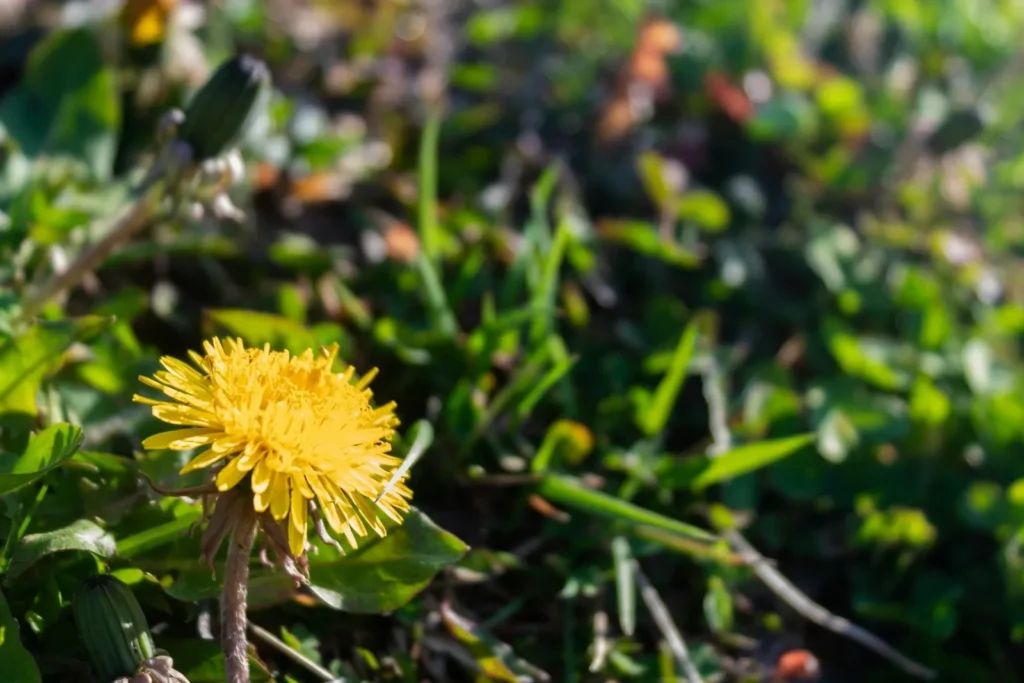
Common weeds
Peoria’s most common lawn weeds
Crabgrass
A summer annual that fills thin, scalped spots. Prevented in spring; a thick, taller lawn is the long-term fix.
Dandelions and clover
Broadleaf weeds best controlled in fall, when they pull treatments down to the roots.
Creeping Charlie
Ground ivy that loves shady, damp spots under trees. Stubborn; takes repeated fall treatments.
Good to know
Illinois rules for lawn treatments
- Anyone applying pesticides, including weed killers, for hire in Illinois needs a license from the Illinois Department of Agriculture. [Partner to confirm license.]
- Illinois limits phosphorus in lawn fertilizer unless a soil test shows a need or you’re establishing a new lawn. Most established lawns use phosphorus-free fertilizer.
- Lawn care companies post small marker flags after an application. Keep kids and pets off until the product dries.
Prefer fewer chemicals? A thicker lawn from aeration and overseeding and mowing at 3 to 4 inches crowds out a lot of weeds on its own.
FAQ
Fertilization and weed control questions
How many treatments does a lawn need per year?
Most programs run four to six visits from early spring to late fall. Fewer can work if the lawn is already thick.
Is it safe for pets?
Follow the label and keep pets off until the product dries. Ask for the product names if you want to look them up.
Can you kill weeds without hurting new grass seed?
Not right away. Most weed killers harm new seedlings, so we wait until new grass has been mowed a few times.
Do you also treat for grubs?
Yes. See grub control.
Related: Peoria lawn care calendar · Lawn care · Grub control · Aeration and overseeding
Get a lawn treatment plan
Call or request a free written estimate. We will get back to you within [RESPONSE TIME].